
32 kWh Floor-Standing Battery Cabinet — 51.2 V
One cabinet, one battery management system, one set of DC cables. The 32 kWh cabinet does what two 16 kWh units in parallel do, without the parallel wiring — and that difference matters more at commissioning than on the datasheet.
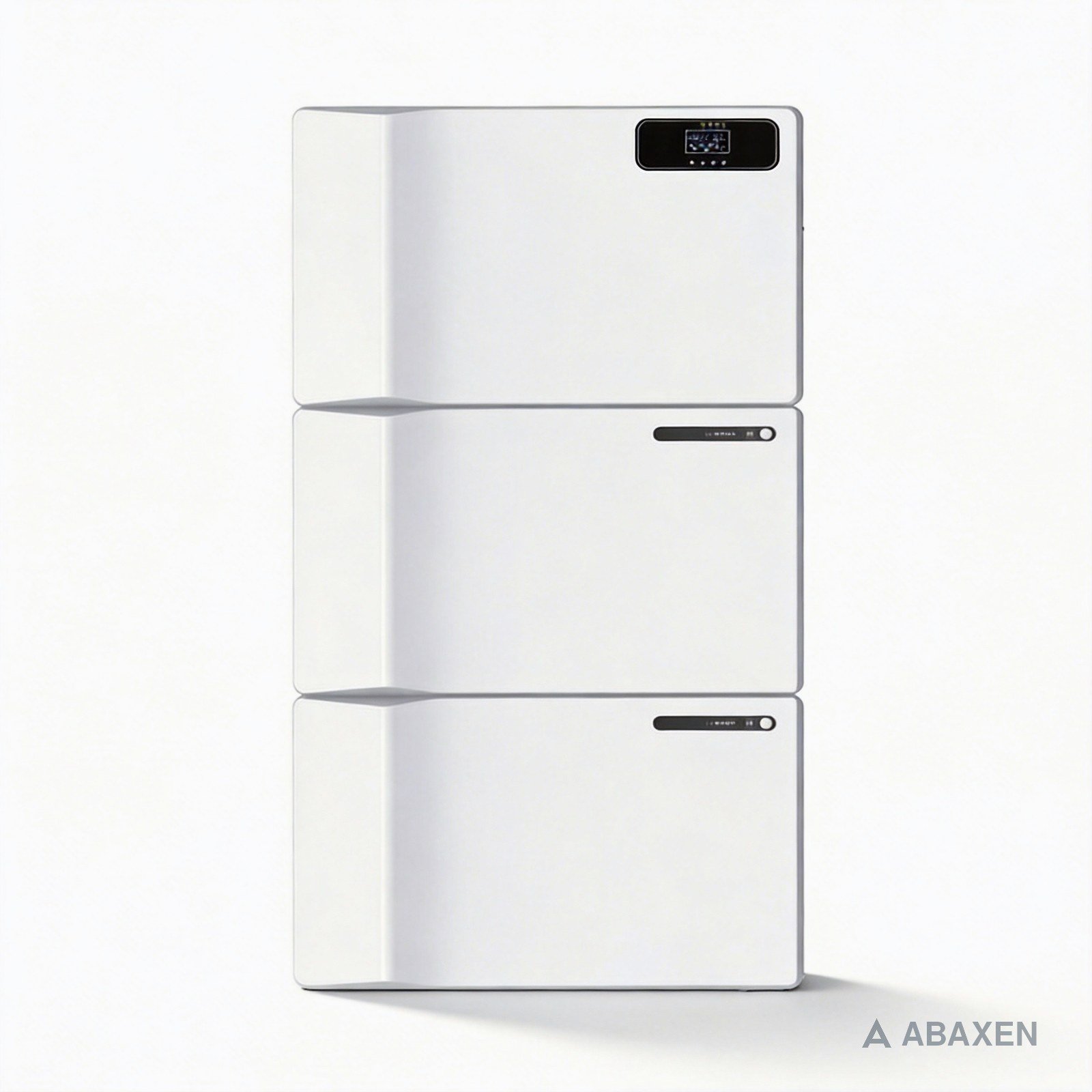
Read This Before You Compare It to Two Smaller Units
- It is a battery cabinet, not an all-in-one. No inverter inside. You pair it with a low-voltage hybrid or off-grid inverter of your choosing.
- It is a low-voltage system. 51.2 V nominal. That keeps the BMS and the service access simple, and it caps the practical inverter size at around 12 kW per cabinet.
- It is a floor-standing unit on castors. Plan the door width and the route from the delivery point to the plant room before ordering. A cabinet that will not fit through the plant room door is a problem no datasheet warns you about.
Specifications
| Parameter | Value |
|---|---|
| Configuration | Single floor-standing cabinet, 51.2 V DC |
| Cell chemistry | LiFePO4 (lithium iron phosphate) |
| Nominal voltage | 51.2 V |
| Rated energy | 32 kWh |
| Usable energy | Available on request |
| Cycle life | Available on request |
| Continuous charge / discharge | Available on request |
| Dimensions (W × D × H) | Available on request |
| Weight | Available on request |
| Ingress protection | Available on request |
| Operating temperature | Available on request |
| Communication | CAN / RS485 to inverter |
| Transport classification | UN3480, Class 9, packing group II |
Where a value reads available on request, we do not have a factory test report behind it yet. We would rather leave the field empty than print a number we cannot defend when you ask for the source.
One Cabinet or Two — What Actually Differs
Two 16 kWh cabinets in parallel and one 32 kWh cabinet deliver the same energy on paper. In the plant room they are different products:
| One 32 kWh cabinet | Two 16 kWh cabinets | |
|---|---|---|
| DC cabling | One positive, one negative run | Two runs plus parallel busbar |
| BMS | One master, one address | Two masters, one has to be configured as slave |
| Commissioning | Single unit, single firmware check | Parallel addressing, current sharing check, firmware parity |
| Failure mode | Lose all 32 kWh | Lose 16 kWh, keep running |
| Handling on site | One heavy lift, check the route first | Two lighter lifts, each within a standard pallet truck |
| Footprint | One position | Two positions, or one wide position |
Where 32 kWh Fits
- Whole-home backup for a large house — a 32 kWh bank covers a typical 15–20 kWh daily consumption through a full evening peak and overnight, with headroom for a cloudy day.
- Daytime load shifting on a time-of-use tariff — charge in the cheap window, discharge across the two expensive ones.
- Small commercial backup — a clinic, a restaurant cold room, a small workshop where 10–15 kWh of critical load needs four hours of cover.
- Off-grid cabins with winter load — two days of autonomy without a generator start at moderate consumption.
Documents on File
Scope first, because this is where most suppliers are loose. The UN38.3 report, MSDS and classification certificate we hold are issued for the 51.2 V / 314 Ah unit — 16.08 kWh, 117.13 kg. Those are the documents published on this site. If you are quoting the 32 kWh cabinet, ask us for the report that names that configuration: we will send the one that matches your model, or tell you it has not been issued yet. We do not put a 16 kWh report behind a 32 kWh product and call it covered.
| Document | Model it names | What it establishes |
|---|---|---|
| UN38.3 test summary | 51.2 V / 314 Ah, 16.08 kWh | T1–T8 passed, report number and test house shown |
| MSDS | 51.2 V / 314 Ah cell | LiFePO4 chemistry, hazard classification, handling |
| Dangerous goods classification | 51.2 V / 314 Ah, 16.08 kWh | UN3480, Class 9, packing group II, valid to 2027-11-09 |
| Sea freight (PI965) | 51.2 V / 314 Ah, 16.08 kWh | Container loading and documentation requirements |
| Road transport (ORT) | 51.2 V / 314 Ah, 16.08 kWh | Inland leg after discharge |
Ask for any of these and we will send the PDF. If a document is not on file for the exact model you are quoting, we will say so rather than send you a logo.
All transport and safety documents for this cabinet family are published at Certificates and Test Reports — report numbers visible, independently verifiable.
Frequently Asked
Can I add a second 32 kWh cabinet later?
Yes, subject to BMS coordination and a firmware match. Confirm the parallel configuration before you design the DC bus, not after.
Does it need a special inverter?
A low-voltage (48 V class) hybrid or off-grid inverter with a compatible CAN profile. Send us the inverter model and we will confirm the profile before you buy.
Does it carry CE marking?
The transport documents are on file. CE is a separate question and depends on the exact configuration — ask us for the current status and we will tell you what we hold, rather than claim a mark we cannot evidence.
Tell us the inverter model, the daily consumption and the backup hours you need. We will tell you whether one cabinet covers it or whether the load profile points to two smaller units.