
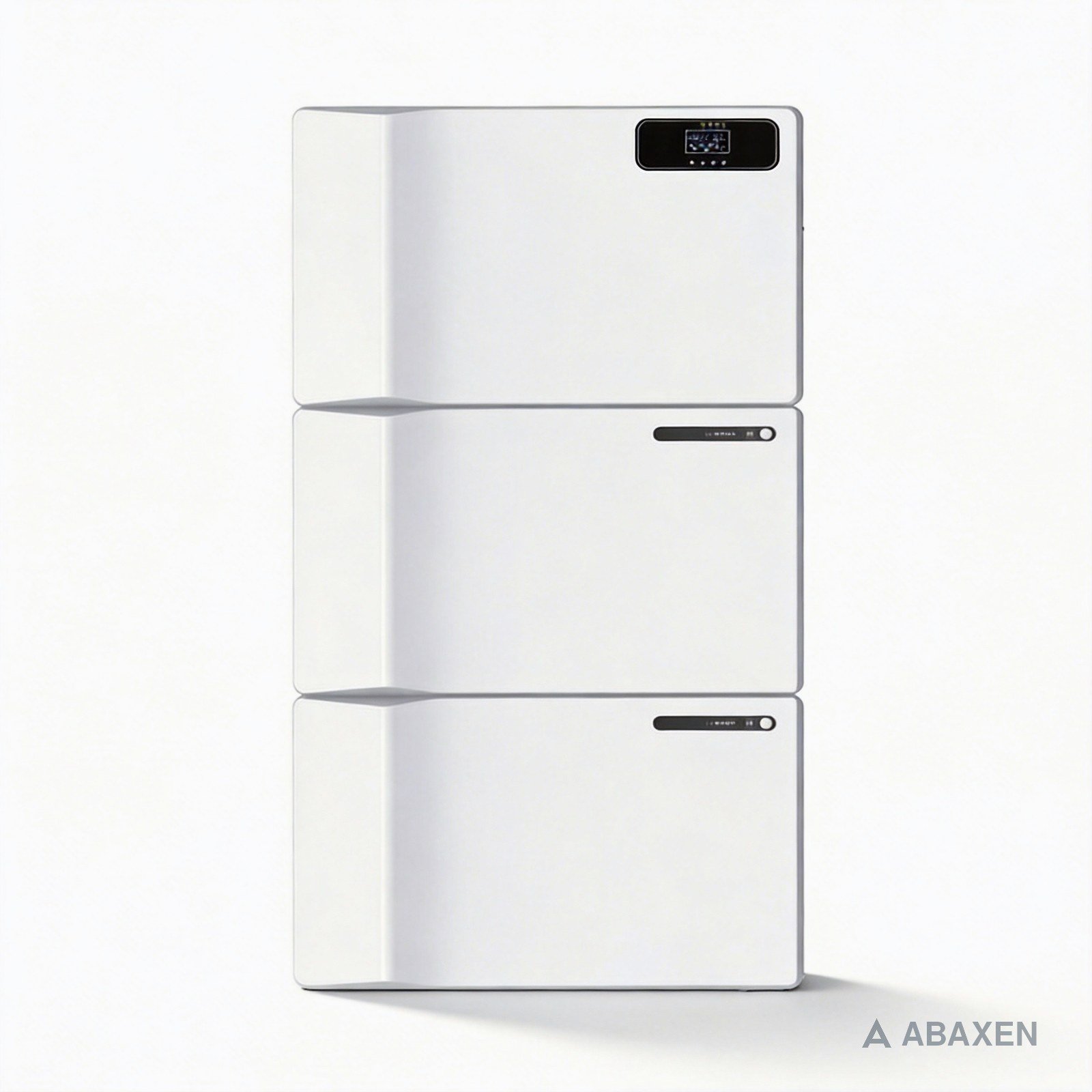
16 kWh Floor-Standing Battery Cabinet — 51.2 V / 314 Ah
A low-voltage LiFePO4 cabinet for residential backup and small commercial peak shaving. 16.08 kWh per unit, parallel to 32 kWh, and — unusually at this price point — the full transport document set is already issued and in date.
Read This Before You Compare It to an All-in-One
Most listings in this class mix two different products together. This is the battery half. Three things follow from that, and all three matter at quotation stage.
- It is a battery cabinet, not an inverter. You supply the low-voltage hybrid inverter; the cabinet supplies 51.2 V DC and the BMS.
- It is a low-voltage system. If your design is a high-voltage stack running 150–600 V, this is the wrong line — look at the rack battery HV page instead.
- It is floor-standing on four castors at 117 kg. Two people can move it on a flat floor. It is not a wall-hung unit and it is not a portable power station.
If you want the inverter bundled, ask us and we will quote the pair. What we will not do is describe this cabinet as something it is not.
Specifications
| Parameter | Value |
|---|---|
| Model | 51.2 / 314 |
| Cell chemistry | LiFePO4 (lithium iron phosphate) |
| Nominal voltage | 51.2 V |
| Rated capacity | 314 Ah |
| Rated energy | 16,076.8 Wh (16.08 kWh) |
| Weight | 117.13 kg |
| Form factor | Floor-standing cabinet, four castors, white |
| Display | Integrated BMS touchscreen |
| Parallel capability | 2 units — 32.16 kWh |
| Cycle life | Available on request |
| Protection class | Available on request |
| Dimensions | Available on request |
The last three rows say “available on request” because we have not received a factory test report for them. We would rather leave a cell blank than publish a number we cannot put a document behind. Ask, and you will get whatever the factory can currently evidence.
The Transport File Is Already Done
A 16 kWh lithium cabinet is Class 9 dangerous goods. It does not move on a normal freight booking. Every shipment needs a document set, and that set expires. This is the part of a quotation most buyers only discover when the forwarder rejects the paperwork.
| Document | What it covers | Reference on file |
|---|---|---|
| UN38.3 test summary | T1–T8, all pass | ORT261014112214-R01, issued 2026-11-03 |
| MSDS | 11-section safety data sheet | ORT261014112214-R02 |
| Sea freight classification | PI965, dangerous goods | ORT261014112214-R03 |
| Road transport classification | Domestic road, ORT | ORT261014112214-R04 |
| Dangerous goods classification | UN3480, Class 9, packing group II | HGJD261170C, valid to 2027-11-09 |
Two things buyers find out late:
- The classification expires. Ours runs to November 2027. If a supplier sends you a file dated 2023, the forwarder will reject it and your container waits at the port while the paperwork is redone.
- Packing group II is not a formality. It sets the packaging performance level, which sets the packaging cost. Budget for it before you price the landed unit, not after.
We send the full set with every quotation. Ask for it before you place an order.
Where It Fits
- Daily cycle shaving — one cabinet covers a typical household evening peak in a market with 8–12 kWh of nightly consumption.
- Weak-grid backup — 51.2 V is the safer choice where grid voltage swings, because the BMS tolerates it better than a high-voltage stack.
- Two-unit sites — 32 kWh covers most small shops, clinics and telecom huts.
- Off-grid cabins — pair with an MPPT charge controller and a low-voltage inverter.
What We Need From You to Quote
- The inverter model you plan to pair it with — or ask us for one
- Destination country — the transport lane and any local grid certification depend on it
- Units per order, and whether you need sea-freight drop testing
- Whether you need our label or a neutral one
All transport and safety documents for this cabinet family are published at Certificates and Test Reports — report numbers visible, independently verifiable.
Frequently Asked
Can I parallel more than two units?
Two is what has been confirmed. Above that, BMS coordination and cable sizing need an engineering review — ask before you design for four.
Is the inverter included?
No. This is the battery cabinet. We quote the inverter separately if you need one.
What is the cycle life?
We have not published a cycle figure for this model. Ask us and we will give you the current factory test data rather than a marketing number.
Does it carry CE marking?
The transport documents — UN38.3, MSDS, dangerous goods classification — are in place. CE marking is a separate question from transport. Ask us for the current status for your market before you assume it, because we will not claim a mark we cannot evidence.
Can you ship one unit?
Yes, but Class 9 packing on a single unit is expensive per kilo. Ask for the landed cost on your quantity before comparing it to a domestic price.
Send us the inverter you plan to pair with it and the destination country, and we will come back with the landed cost including Class 9 packing and the document set for that lane. No commitment required on either side.